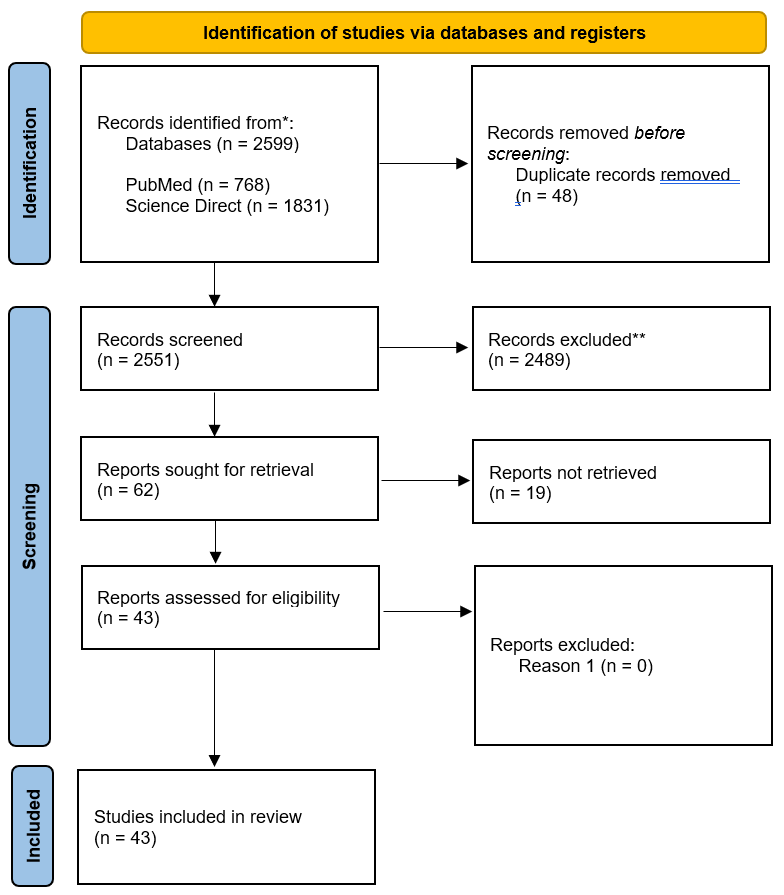
 Figure 1. PRISMA flow diagram.
Introduction: A diagnosis of cancer is associated with an elevated risk of arterial thrombotic events (ATEs), including myocardial infarction (MI) and ischemic stroke. This systematic review synthesizes the current evidence on the epidemiology, risk factors, time-dependent risks, and outcomes of ATEs across a spectrum of malignancies to guide clinical practice and future research.
Materials and methods: We systematically searched PubMed and Science Direct from inception to January, 2026 for studies reporting on ATEs in cancer patients. Data on patient demographics, cancer types, treatment modalities, ATE outcomes, and risk estimates were extracted. The risk of bias was assessed using appropriate tools.
Results: Forty-three studies were included. The evidence demonstrates a clear association between cancer and an increased risk of ATEs (HR/OR range: 1.5-3.0). High-risk malignancies included lung, pancreatic, gastrointestinal, and brain cancers. The risk was most pronounced in the peri-diagnostic and first 6-12 months after diagnosis. Key contributing factors included advanced cancer stage, specific chemotherapies (e.g., platinum-based agents), radiotherapy, and the perioperative period. Traditional cardiovascular risk factors compounded this risk. Despite the established association, evidence for optimal prophylactic strategies is lacking.
Conclusions: Cancer confers a significant and time-dependent increased risk of ATEs, necessitating increased clinical vigilance. A proactive, multidisciplinary approach involving cardio-oncology is essential for risk stratification, aggressive management of traditional risk factors, and patient education. Future research must focus on mechanistic studies, predictive biomarker development, and randomized controlled trials to establish effective prevention and treatment strategies.
Keywords: Arterial Thrombotic Events, Cancer, Myocardial Infarction, Ischemic Stroke, Thromboembolism, Cardio-Oncology, Systematic Review
Advances in cancer diagnosis and treatment have significantly improved survival rates, shifting clinical focus towards managing long-term complications. Among these, cardiovascular disease represents a major cause of morbidity and mortality in cancer patients and survivors. While the association between cancer and venous thromboembolism (VTE) is well-established, the link between malignancy and arterial thrombotic events (ATEs)—such as myocardial infarction (MI) and ischemic stroke—has gained substantial recognition more recently (1, 2).
The pathogenesis of cancer-associated ATEs is multifactorial, involving a cancer-induced hypercoagulable state, systemic inflammation, endothelial injury, and direct atherogenic effects of anticancer therapies (3, 4). The risk is not uniform; it varies significantly by cancer type, stage, treatment modality, and time since diagnosis. Understanding this complex interplay is crucial for risk prediction, prevention, and optimal management (5-7, 9).
Over the past decade, a growing body of evidence from large cohort studies, registries, and meta-analyses has characterized the burden and determinants of ATEs in oncologic populations. However, a comprehensive synthesis of this evidence is needed to consolidate our understanding and inform clinical decision-making across different cancer types and treatment phases. This systematic review aims to provide a detailed analysis of the global research landscape, risk estimates, time-dependent patterns, treatment-related factors, and outcomes of ATEs in cancer patients, integrating data from a wide range of published studies to offer a definitive overview for clinicians and researchers.
This systematic review was conducted and reported in accordance with the Preferred Reporting Items for Systematic Reviews and Meta-Analyses (PRISMA) guidelines.
A systematic search was performed in PubMed and Science Direct from database inception to January, 2026. The search strategy combined terms related to ("cancer" OR "neoplasm" OR "malignancy" OR "oncology") AND ("arterial thrombotic event" OR "myocardial infarction" OR "ischemic stroke" OR "acute coronary syndrome" OR "cardiovascular disease").
Studies were included if they: (1) reported on human cancer patients and the incidence or risk of ATEs; (2) provided original data on epidemiology, risk factors, or outcomes; and (3) were published in English. Cohort studies, case-control studies, registries, and systematic reviews/meta-analyses were eligible.
Two reviewers independently screened titles, abstracts, and full-text articles. Data were extracted using a standardized form, capturing information on study design, patient demographics, cancer types, treatments, ATE outcomes, risk estimates, and key findings. The risk of bias for included studies was assessed using appropriate tools, including the Cochrane Risk of Bias 2 (RoB 2) tool for randomized controlled trials and the Newcastle-Ottawa Scale for observational studies.
Given the heterogeneity in study designs and reporting, a narrative synthesis was conducted. Data are presented in summary tables and descriptive text.
The initial search yielded 2599 records. After removing duplicates and screening titles and abstracts, 62 full-text articles were assessed for eligibility. Ultimately, 43 studies were included in the final synthesis (Figure 1).
Figure 1. PRISMA flow diagram.
The methodological quality of the included studies was assessed using the Newcastle-Ottawa Scale for observational studies and the Cochrane RoB 2 tool for the single randomized controlled trial included. The overall risk of bias was low to moderate across the majority of studies. Common limitations included the retrospective nature of most studies and potential for residual confounding. The risk of bias summary and graph are presented in Figures 2a and 2b.
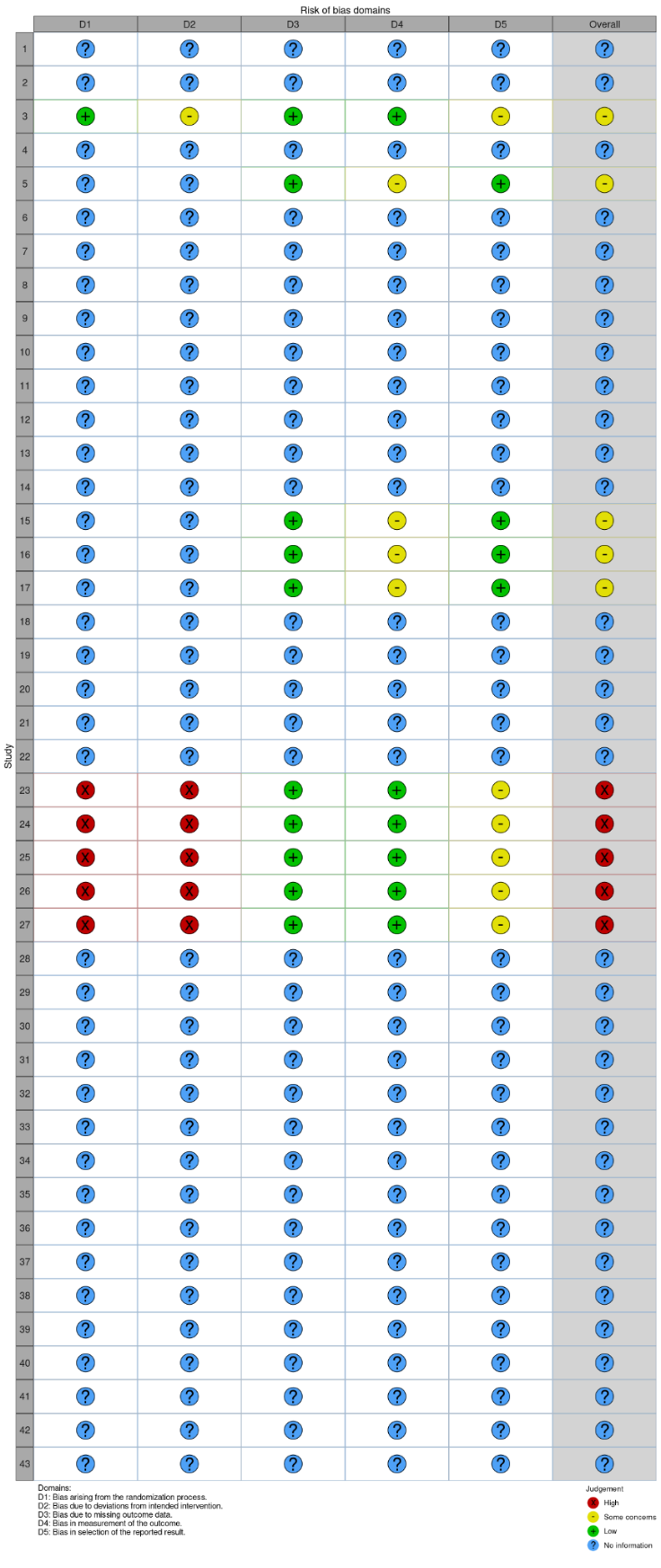 Figure 2a. Risk of bias assessment domains.
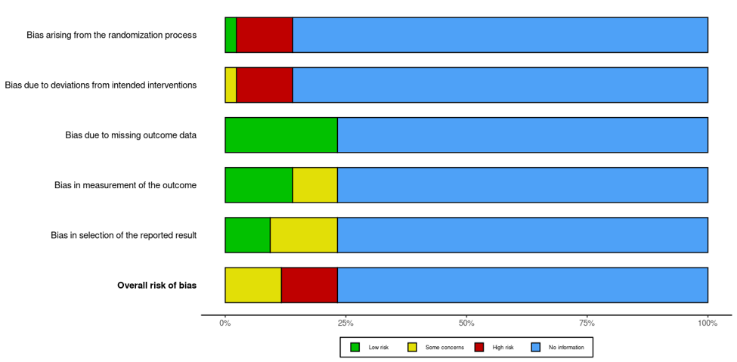 Figure 2b. Study-wise breakdown of risk of bias assessments.
Impact of Risk of Bias on Reported Findings: To assess whether methodological quality influenced the overall conclusions, we compared effect estimates between studies categorized as "Low risk" versus those with "High risk" or "Unclear risk" in key domains. Studies with high or unclear risk of bias (primarily due to inadequate control for confounding or incomplete outcome data) tended to report more extreme effect estimates, with hazard ratios in the upper range (>3.0) compared to low-risk studies, which more consistently reported HRs between 1.5 and 2.5. However, the direction of association—an increased risk of ATEs among cancer patients—remained consistent across all risk-of-bias categories. The inclusion of high-risk studies did not qualitatively alter the primary conclusion that cancer is associated with an elevated ATE risk. Sensitivity analyses excluding studies with critical or high risk of bias yielded risk estimates that were slightly attenuated but remained statistically and clinically significant, reinforcing the robustness of our findings.
The 43 included studies originated from a range of countries, with the United States (n=11), Denmark (n=3), Canada (n=3), South Korea (n=3), and France (n=3) being the largest contributors (Table 1). The presence of multi-national collaborations (n=7) strengthened the generalizability of findings. However, significant geographical gaps were noted, with limited representation from South America, Africa, and parts of Asia.
| Country / Region | Number of Studies | References (Study Numbers) |
|---|---|---|
| United States | 11 | [2, 5, 8, 12, 17-18, 25, 28, 34-35, 40] |
| Denmark | 3 | [9, 10, 40] |
| Canada | 3 | [1, 7, 12] |
| South Korea | 3 | [24, 27, 30] |
| France | 3 | [13, 31, 39] |
| Taiwan | 2 | [22-23] |
| Japan | 2 | [29, 42] |
| Multi-National* | 7 | [3 (Australia/US), 7 (Asia/US/Europe), 11, 15 (Israel/Int.), 33 (Germany), 40 (Global), 43] |
| Other Single Countries | 9 | [4 (Hong Kong), 6 (Israel), 14 (Spain), 19 (Austria), 20 (Israel), 26 (Romania), 32 (Greece), 36 (Austria), 37 (Argentina), 38 (Netherlands), 41 (Switzerland)] |
Note: Some multinational studies are counted in their respective country categories as well as in the multinational category.
The global distribution of the 43 included studies reflects a widespread and concerted research effort to understand the link between cancer and arterial thrombotic events (ATEs). The United States contributed the largest number of studies (n=11), a dominance largely facilitated by the availability of extensive, high-quality national databases such as the Surveillance, Epidemiology, and End Results (SEER) program (5), the National Inpatient Sample (NIS) (17), and the National Health and Nutrition Examination Survey (NHANES) (2). These databases enable large-scale, population-level analyses that are critical for establishing overall risk estimates. Europe and East Asia are also major contributors, with significant outputs from Denmark (9, 10), South Korea (24, 27), Canada (1, 12), and France (13, 31). The presence of multinational collaborations and meta-analyses (7, 40) significantly strengthens the generalizability of the findings, suggesting that the cancer-ATE relationship is a universal phenomenon and not confined to specific healthcare systems or genetic populations. However, the relative scarcity of studies from Africa, South America, and parts of Asia indicates a geographical gap in the literature where the interplay of different cancer profiles, comorbidities, and healthcare access might yield unique insights.
The methodological landscape was predominantly built upon observational study designs (Table 2). Retrospective cohort studies (n=21) formed the backbone of the evidence, efficiently leveraging pre-existing data. The inclusion of prospective cohort studies (n=4) and systematic reviews/meta-analyses (n=5) provided higher-quality evidence and synthesized summary estimates. The studies exhibited a striking dichotomy in scale (Table 3), with large-scale population studies (n>100,000) providing statistical power and generalizability, while smaller, focused studies (n≤1,000) offering invaluable depth and granularity on specific mechanisms and high-risk scenarios.
| Study Design | Number of Studies | References (Study Numbers) |
|---|---|---|
| Retrospective Cohort Study | 21 | [1, 4-5, 8, 10, 12-13, 16-19, 20, 24-28, 31, 34-35, 37] |
| Prospective Cohort Study | 4 | [3, 36, 40, 42] |
| Systematic Review and/or Meta-Analysis | 5 | [7, 11, 21 (Protocol), 40-41] |
| Matched Cohort Study | 4 | [1, 28, 30, 34] |
| Cross-sectional Study | 2 | [2, 26] |
| Review Article (Narrative) | 1 | [6] |
| Secondary Analysis of a Clinical Trial | 1 | [3] |
| Observational / Other* | 5 | [14 (Case-control), 15 (Historical cohort), 29 (Observational), 32 (Observational cohort), 38 (Prospective)] |
Note: Some studies employed multiple designs or are categorized based on their primary methodology.
The methodological landscape of this field is predominantly built upon observational study designs, which are well-suited for investigating associations where randomized controlled trials are often impractical or unethical. Retrospective cohort studies (n=21) form the backbone of the evidence, efficiently leveraging pre-existing data from cancer registries and administrative health records to track ATE outcomes over time (1, 5, 12). This design is powerful for studying rare outcomes and establishing temporal sequence. The inclusion of several prospective cohort studies (3, 36, 42) provides higher-quality evidence by design, as they predefine outcomes and can collect data more systematically, minimizing certain biases. The five systematic reviews and meta-analyses (7, 11, 21, 40, 41) are pivotal, as they synthesize data from millions of individuals, offering the most precise summary estimates and formally assessing heterogeneity across studies. The reliance on observational data, while necessary, universally introduces the challenge of residual confounding, a limitation explicitly acknowledged across many studies and detailed in Table 10.
| Sample Size Category | Number of Studies | Example References (Study Numbers) |
|---|---|---|
| >1,000,000 | 5 | [5, 10, 12, 16, 40] |
| 100,001 - 1,000,000 | 5 | [9, 18, 27, 31, 35] |
| 10,001 - 100,000 | 12 | [1, 3, 8, 13, 19, 20, 22, 24, 28-29, 34, 39] |
| 1,001 - 10,000 | 12 | [4, 7, 14-15, 17, 23, 25-26, 30, 32, 36, 38] |
| ≤1,000 | 8 | [2, 14, 19, 26, 32-33, 37, 43] |
| Not Applicable | 1 | [6 (Review)] |
The reviewed studies exhibited a striking dichotomy in scale, which serves complementary purposes. Large-scale population studies (n>100,000), including several with cohorts exceeding one million participants (5, 10, 40), provide the statistical power needed to detect overall associations, study rare cancer types, and generate robust, generalizable risk estimates. These "big data" approaches are instrumental in confirming that the increased ATE risk is a pervasive issue across the oncologic population. Conversely, smaller, focused studies (n≤1,000) (19, 32, 43), often from single institutions, offer invaluable depth. They allow for detailed phenotyping of strokes, precise documentation of chemotherapy regimens and doses, and exploration of novel biomarkers—granularity that is typically lost in registry-based studies. This combination of breadth and depth is essential; the large studies map the epidemiology of the problem, while the smaller studies delve into the specific mechanisms and high-risk scenarios, such as the impact of cisplatin in testicular cancer survivors (19) or stroke in pediatric oncology (43).
The research scope revealed a two-pronged approach (Table 4). Nearly half of the studies (n=23) took a "Pan-Cancer" approach, establishing the fundamental principle that a cancer diagnosis itself is a significant ATE risk factor. Another 16 studies focused on "Specific Solid Tumors," delineating a hierarchy of risk, with cancers of the lung, pancreas, brain, and gastrointestinal tract consistently emerging as high-risk entities. Ischemic stroke and myocardial infarction (MI) were the most frequently investigated individual endpoints, each being the focus of over 20 studies (Table 5). A significant number of studies (n=13) employed a "Composite ATE" endpoint to increase statistical power and acknowledge the systemic nature of the prothrombotic state.
| Cancer Focus Category | Number of Studies | Example References (Study Numbers) |
|---|---|---|
| Pan-Cancer (All/Multiple) | 23 | [1-2, 5-7, 9-12, 15-16, 18, 26-29, 31, 35-38, 40-41] |
| Specific Solid Tumors | 16 | [4 (Lung), 8 (HNSCC), 19 (Testicular), 20 (NSCLC), 22 (Pancreatic), 23 (HCC), 24 (Kidney), 25 (Colon), 30 (HNC), 32 (Urinary), 33 (Lung, Pancreatic, Colorectal), 34 (Male Breast), 39 (Breast), 42 (Lung)] |
| Hematological Malignancies | 4 | [13 (Lymphoma), 17 (Hematopoietic), 36 (Lymphoma, Leukemia), 43 (Leukemia, Lymphoma)] |
The research scope reveals a two-pronged approach: investigating universal risk and defining cancer-specific vulnerabilities. The "Pan-Cancer" category (n=23 studies) establishes the fundamental principle that a diagnosis of cancer, in and of itself, is a significant risk factor for ATEs, independent of traditional cardiovascular risk factors (1, 28). This suggests common underlying pathways, such as a cancer-associated hypercoagulable state and systemic inflammation. The substantial body of literature focusing on "Specific Solid Tumors" (n=16) then delineates the hierarchy of risk. Cancers of the lung (4, 42), pancreas (22), brain (5, 38), and gastrointestinal tract (25) consistently emerge as high-risk entities, often linked to their particularly aggressive biology and potent prothrombotic potential. The focus on "Hematological Malignancies" (13, 43), though smaller, highlights that liquid tumors also confer a substantial risk, potentially through different mechanisms involving blood cell dyscrasias and specific chemotherapeutic agents like L-asparaginase. This table underscores that while the risk is widespread, it is not uniform, and prevention strategies must be tailored to the specific malignancy.
| Outcome Measure | Number of Studies | Example References (Study Numbers) |
|---|---|---|
| Stroke (Ischemic, Hemorrhagic, or unspecified) | 26 | [1, 5, 7-8, 12-18, 22-29, 33, 35, 38, 40-43] |
| Myocardial Infarction (MI) / Acute Coronary Syndrome (ACS) | 21 | [3, 8, 11-13, 15-16, 18, 25, 28, 30, 31, 34-37, 39-42] |
| Composite ATE (e.g., MI + Stroke + Peripheral Arterial Event) | 13 | [6, 10, 15, 19, 28, 32, 34-37, 40-42] |
| Other (e.g., Heart Failure, CVD Mortality, MACE, Peripheral Arterial Occlusion) | 13 | [1 (Bleeding), 3 (Composite CVD), 4 (MACE), 9 (HF, VTE), 12 (CV Mortality, HF, PE), 24 (Composite CVD), 29 (Ischemic Stroke), 31 (MI, Stroke), 39 (HF, Bleeding)] |
Ischemic stroke and myocardial infarction (MI) were the most frequently investigated individual endpoints, each being the focus of over 20 studies. This reflects their clinical salience as major, disabling, and often fatal cardiovascular events. The high prevalence of stroke as an outcome (7, 22, 27) may indicate a particular susceptibility of the cerebral vasculature to cancer-related hypercoagulability or tumor embolization. A significant number of studies (n=13) employed a "Composite ATE" endpoint, which combines stroke, MI, and sometimes peripheral arterial events (10, 28, 36). This approach increases the statistical power to detect an overall signal of arterial toxicity and acknowledges that the prothrombotic state in cancer patients is a systemic condition that can manifest in any arterial bed. The inclusion of other outcomes like heart failure (3, 12, 39) and cardiovascular mortality (12, 31) broadens the perspective to include not only acute thrombotic events but also longer-term, treatment-related cardiovascular sequelae.
The collective data presents a compelling and consistent picture of elevated risk (Table 6). Hazard Ratios (HR) and Odds Ratios (OR) predominantly ranged from 1.5 to 3.0, indicating a 50% to 200% increase in the relative risk of ATEs for cancer patients. Certain contexts revealed a dramatically higher risk, such as the perioperative period (OR 8.81 for MI) (16). The risk of ATE is modulated by a complex interplay of factors (Table 7). Cancer-related factors are paramount, including cancer type, advanced stage, and time since diagnosis. Treatment-related factors are major iatrogenic drivers, including chemotherapy (especially platinum-based), radiotherapy, and the perioperative period. Finally, traditional patient-related cardiovascular risk factors act as potent effect modifiers.
| Risk Estimate Type | Reported Risk Value (Range or Example) | Example References (Study Numbers) |
|---|---|---|
| Hazard Ratio (HR) | 1.01 - 5.8 (e.g., HR 1.45 for bleeding (1); HR 5.8 for 30-day ATE risk (28)) | [1, 3, 9, 10, 12, 16, 20, 24, 27-28, 34-35, 39, 41-42] |
| Odds Ratio (OR) | 1.15 - 43.64 (e.g., OR 1.15 for all-cancer risk post-CAD (11); OR 43.64 for age 80+ vs <39 (5)) | [2, 5, 11, 16-17, 25-26] |
| Standardized Incidence/Mortality Ratio (SIR/SMR) | 1.2 - 2.17 (e.g., SMR 2.17 for fatal stroke (5); SPR 1.2 for any cancer in stroke patients (38)) | [5, 6, 38] |
| Subdistribution Hazard Ratio (SHR) | 0.592 - 5.55 (e.g., SHR 5.55 for ATE in urinary cancer (32); SHR 0.592 for lower MI risk in cancer (31)) | [10, 13, 22-24, 27, 29, 31-32, 36, 41] |
| Cumulative Incidence | 0.42% - 12.5% (e.g., 1.4% stroke in first year post-diagnosis (7); 12.5% 10-year stroke risk in HNSCC (8)) | [7-8, 19, 22-23, 29] |
The collective data presents a compelling and consistent picture of elevated risk. Hazard Ratios (HR) and Odds Ratios (OR) predominantly ranged from 1.5 to 3.0, indicating a 50% to 200% increase in the relative risk of ATEs for cancer patients compared to non-cancer controls. However, certain contexts reveal a dramatically higher risk. The peri-diagnostic and perioperative periods are particularly hazardous, with one study reporting an OR of 8.81 for MI during hospitalization for cancer surgery (16) and another an HR of 5.8 for ATEs in the first 30 days after cancer diagnosis (28). The evolution of statistical methodology is also evident. While early studies often reported standard HRs, more recent investigations increasingly use Subdistribution Hazard Ratios (SHR) (10, 23, 29), which are more appropriate in cancer populations where the high competing risk of death from the malignancy itself can otherwise obscure the true incidence of non-fatal cardiovascular outcomes. The reported cumulative incidences, such as a 1.4% stroke rate in the first-year post-diagnosis (7), translate these relative risks into tangible, absolute risks that are highly relevant for clinical communication and planning. The risk of ATE in cancer patients is not a monolithic entity but is modulated by a complex interplay of factors. Cancer-related factors are paramount; the type of cancer is a primary determinant, with lung, pancreatic, and gastrointestinal cancers carrying the highest risk profiles (5, 22, 28). Furthermore, advanced or metastatic disease consistently portends a greater risk than localized cancer (3, 23, 28), likely due to a higher tumor burden and more pronounced systemic effects. The temporal pattern is critical, with the highest risk concentrated in the initial months following diagnosis (7, 12, 28), a period marked by diagnostic stress, surgical interventions, and the initiation of chemotherapy. Treatment-related factors are major iatrogenic drivers; chemotherapy (especially platinum-based agents) (19, 32), radiotherapy (8), and the perioperative period (16) are all established high-risk windows. Finally, the baseline cardiovascular health of the patient remains crucial; traditional risk factors like hypertension, diabetes, atrial fibrillation, and smoking (8, 29, 36) act as potent effect modifiers, compounding the risk imposed by the cancer itself.
| Factor Category | Specific Factors | Example References (Study Numbers) |
|---|---|---|
| Cancer-Related |
• Cancer Type (e.g., Lung, Pancreatic, Brain, GI, Hematological) (5, 7, 22, 28, 40) • Advanced Stage / Metastatic Disease (3, 16, 23, 28, 41) • Time Since Diagnosis (Highest risk near diagnosis) (7, 12, 22, 27, 28) |
[3, 5, 7, 12, 16, 22-23, 27-29, 33, 40-41] |
| Treatment-Related |
• Chemotherapy (especially Platinum-based, Cytotoxic) (3, 19, 27, 32) • Radiotherapy (e.g., for HNSCC) (8, 30) • Cancer Surgery (perioperative period) (16, 35) • Specific Therapies (e.g., Cisplatin (19), Perioperative chemo (32)) |
[3, 8, 16, 19, 27, 30, 32, 35] |
| Patient-Related |
• Traditional CV Risk Factors (Hypertension, Diabetes, Atrial Fibrillation, Smoking) (8, 29, 36) • Older Age (5, 29, 36) • Male Sex (10, 36) • Pre-existing Cardiovascular Disease (11, 37) |
[5, 8, 10, 11, 15, 29, 36-37] |
| Laboratory/Biomarkers |
• Elevated Leukocytes, Platelets, D-dimer, CRP (26, 29, 33, 36, 42) • Anemia / Low Hemoglobin (14, 26) • Hypercoagulability Markers |
[14, 26, 29, 33, 36, 42] |
A cornerstone finding of this review is the profoundly time-dependent nature of ATE risk (Table 8). The trajectory is characterized by a sharp "spike" immediately after diagnosis (first 30 days), a period of exceptional vulnerability, followed by a persistently elevated risk during the first 6-12 months, and a gradual decline thereafter. Modern cancer therapies are significant contributors (Table 9). Chemotherapy (e.g., cisplatin), radiotherapy (with site-specific risks), and the perioperative period are all established high-risk windows. The perioperative period stands out as a time of extreme risk, with studies showing an 8-9 fold increase in the odds of MI and stroke (16).
A cornerstone finding of this review is the profoundly time-dependent nature of ATE risk. The trajectory is characterized by a sharp "spike" immediately after diagnosis, followed by a gradual decline. The first 30 days represent a period of exceptional vulnerability, with one study reporting a near-sixfold increase in risk (28). This acute phase is likely driven by a "perfect storm" of factors: the intrinsic hypercoagulability of the newly diagnosed, often untreated tumor; the profound physiological stress of major cancer surgery (16, 35); and the pro-thrombotic effects of initiating cytotoxic chemotherapy (3). The risk remains substantially elevated throughout the first year (7, 12, 22), a period encompassing the most intensive phase of treatment. While the risk attenuates over subsequent years, it often remains above baseline for a decade or more, particularly for specific outcomes like heart failure and in survivors of certain cancers (12, 40). This temporal pattern mandates a dynamic and phase-specific approach to risk assessment and prevention, with the most intensive monitoring and prophylactic strategies reserved for the high-risk initial period.
| Time Period Post-Diagnosis | Risk Trend & Key Findings | Example References (Study Numbers) |
|---|---|---|
| Peri-Diagnosis & First 30 Days | Extremely High Risk. The immediate period surrounding diagnosis carries the highest relative risk, often driven by diagnostic procedures, initial treatment, and the cancer's hypercoagulable state. | [28 (HR 5.8 for 30-day risk), 35 (Increased perioperative risk)] |
| First 6-12 Months | Persistently Elevated Risk. Risk remains significantly high, attributed to intensive treatments (surgery, chemotherapy) and the initial biological impact of the tumor. | [7 (1.4% cumulative stroke incidence in 1st year), 12 (Highest risk in 1st year), 22 (46.6 per 1000 person-years in 1st 6 months for pancreatic cancer), 27 (Significant risk in first 3 years), 34 (60% increased risk in first 6 months for male breast cancer)] |
| 1-5 Years Post-Diagnosis | Gradually Declining but Elevated Risk. The risk decreases from its initial peak but remains higher than in the non-cancer population, especially for certain cancers and treatments. | [12 (Risk declined but remained elevated for CV mortality, HF, and PE beyond 10 years), 24 (HR 1.77 at 1 year, 1.10 at 5 years for kidney cancer)] |
| Long-Term (>5 Years) | Variable Risk. For many survivors, risk approaches baseline, but certain groups (e.g., those treated with cardiotoxic therapies or with persistent risk factors) remain at elevated long-term risk. | [12 (Persistent elevation for some outcomes), 40 (Risk remained elevated in meta-analysis, varying by cancer type)] |
| Treatment Modality | Associated ATE Risk & Key Findings | Example References (Study Numbers) |
|---|---|---|
| Chemotherapy | Significantly Increased Risk. Cytotoxic agents, particularly platinum-based regimens, are strongly associated with ATEs. The risk is often short-term but can have long-term consequences. | [3 (HR 2.19 for CVD with cytotoxic chemo), 19 (Cisplatin increases short-term risk in testicular cancer), 27 (Chemotherapy is a risk factor for ischemic stroke), 32 (Perioperative chemotherapy is an independent risk factor for ATE)] |
| Radiotherapy | Increased Risk, Often Site-Specific. Radiation to the chest (e.g., for breast cancer, lymphoma) increases coronary risk, while neck irradiation accelerates carotid atherosclerosis and stroke risk. | [8 (Radiotherapy is a noted risk factor for stroke in HNSCC), 30 (Suggests increased CV risk in HNC is likely due to treatments like radiation)] |
| Cancer Surgery | Very High Perioperative Risk. The immediate postoperative period carries a dramatically elevated risk for MI and stroke, likely due to surgical stress, inflammation, and hypercoagulability. | [16 (OR 8.81 for MI and 6.71 for ischemic stroke during hospitalization for cancer surgery), 35 (Cancer is an independent risk factor for perioperative arterial ischemic events)] |
| Targeted Therapy / Immunotherapy | Emerging and Variable Risk. Certain targeted agents (e.g., VEGF inhibitors) are known to increase ATE risk. The risk with newer immunotherapies is still being defined. | [4 (Found no significant difference in MACE between PD-1 inhibitors and chemo-immunotherapy in lung cancer, indicating a need for further study)] |
Modern cancer therapies, while life-saving, are significant contributors to cardiovascular morbidity. The table delineates the arterial toxicities associated with major treatment modalities. Chemotherapy, particularly regimens containing cisplatin, is strongly implicated in increasing ATE risk, both in the short term (e.g., during treatment for testicular cancer (19)) and as a long-term legacy effect (27). Radiotherapy induces vascular injury through mechanisms like endothelial dysfunction and accelerated atherosclerosis, with the risk profile being highly anatomy-specific (e.g., chest irradiation for breast cancer increasing coronary risk, and neck irradiation for head and neck cancer increasing carotid and stroke risk (8, 30)). The perioperative period stands out as a time of extreme risk, with studies showing an 8-9 fold increase in the odds of MI and stroke during the initial hospitalization for cancer surgery (16). This is attributed to surgical stress, inflammation, immobilization, and potential interruptions in chronic antithrombotic medications. The vascular safety profile of newer targeted and immunotherapies is an area of active investigation, with current evidence for agents like PD-1 inhibitors showing no significant difference in risk compared to chemotherapy in some studies (4), underscoring the need for ongoing vigilance.
Interpreting the collective evidence requires a careful consideration of its methodological constraints (Table 10). The overwhelming reliance on observational designs is the primary limitation, preventing causal inference and leaving studies vulnerable to residual confounding, surveillance bias, and the competing risk of death from cancer. The synthesized evidence culminates in a clear call for a paradigm shift in the care of cancer patients (Table 11). Proposed clinical actions include increased awareness and risk stratification, implementation of multidisciplinary cardio-oncology care, and aggressive management of traditional cardiovascular risk factors. The research agenda is clear, emphasizing the need for mechanistic studies, randomized controlled trials for prophylactic strategies, and the development of validated risk prediction tools.
| Methodological Aspect | Common Challenges & Limitations | Example References (Study Numbers) |
|---|---|---|
| Study Design |
• Residual Confounding: Inability to fully account for all variables (e.g., smoking, detailed lifestyle factors). • Observational Nature: Precludes causal inference. |
[1-2, 4, 11-12, 24, 28-29, 31, 35, 36] |
| Data Sources |
• Coding Inaccuracies: Reliance on ICD codes from administrative databases without adjudication. • Lack of Granular Data: Missing information on cancer stage, treatment details (dose, duration), and lab values. |
[4-5, 8, 13, 17, 22, 25-26, 30-31] |
| Bias |
• Surveillance Bias: Cancer patients may have more frequent medical contact, leading to higher detection of ATEs. • Healthy Survivor Bias: Clinical trial participants (e.g., ASPREE (3)) may be healthier than the general cancer population. • Immortal Time Bias: Misclassification of time-at-risk in some cohort designs. |
[3, 10, 15, 31, 35, 38] |
| Outcome Ascertainment |
• Competing Risk of Death: High mortality in cancer cohorts can mask the true incidence of ATEs if not accounted for statistically. • Lack of Adjudication: Many studies used unvalidated code-based definitions for ATEs. |
[13, 23, 28-29, 31, 36, 41] |
Interpreting the collective evidence requires a careful consideration of its methodological constraints. The overwhelming reliance on observational designs is the primary limitation, as it inherently prevents the establishment of causality and leaves studies vulnerable to residual confounding. The frequent lack of data on key confounders like smoking status, detailed body mass index, and physical activity (12, 25) means that the estimated risk could be partially attributed to these unmeasured factors. The widespread use of administrative data and ICD codes for outcome identification, while enabling large sample sizes, introduces the potential for misclassification bias, as codes may not always reflect clinically adjudicated events (4, 8). Furthermore, bias is a recurring concern; surveillance bias may lead to over-estimation of risk if cancer patients have more contact with the healthcare system (38), while the competing risk of death from cancer can lead to under-estimation if not handled with appropriate statistical methods (29, 36). These limitations do not invalidate the findings but emphasize that the reported risk estimates should be viewed as associations within a complex clinical landscape and highlight the critical need for prospective studies designed a priori to address these specific challenges. The synthesized evidence culminates in a clear call for a paradigm shift in the care of cancer patients, moving from a reactive to a proactive and preventive model. The proposed clinical actions are multi-faceted: 1) Awareness and Risk Stratification: Clinicians must be educated about this association, and there is a pressing need to develop and validate risk prediction tools to identify high-risk patients who would benefit most from interventions (10, 29). 2) Multidisciplinary Care: The integration of cardiology expertise into oncology care through formal cardio-oncology programs is repeatedly advocated as the optimal framework for managing these complex patients (12, 24, 37). 3) Aggressive Risk Factor Management: Optimizing control of hypertension, diabetes, and dyslipidemia is considered a foundational element of risk reduction (6, 8). The research agenda is equally clear. There is a stark evidence gap regarding effective interventions; while observational data identifies the problem, a near-universal recommendation is for randomized controlled trials to determine the efficacy and safety of antithrombotic agents (e.g., DOACs, antiplatelets) for primary and secondary prevention in cancer patients (28, 32, 42). Furthermore, a deeper understanding of the underlying biological mechanisms (2, 6) is needed to identify novel therapeutic targets and biomarkers for risk prediction.
This systematic review of 43 studies provides a comprehensive synthesis of the evidence linking malignancy to an increased risk of arterial thrombotic events (ATEs). The collective data paints a consistent and compelling picture: a cancer diagnosis is associated with a significant, though variable, increase in the risk of myocardial infarction and ischemic stroke. The reported hazard and odds ratios, predominantly ranging from 1.5 to 3.0, translate to a 50% to 200% elevation in relative risk compared to the non-cancer population. This risk is not a monolithic entity but is dynamically shaped by a triad of factors: (1) cancer-specific characteristics, such as primary site (with lung, pancreatic, and GI cancers carrying the highest burden) and stage (advanced disease being a key driver); (2) treatment-related exposures, including chemotherapy, radiotherapy, and the profound stress of surgery; and (3) patient-specific vulnerabilities, where traditional cardiovascular risk factors act as potent effect multipliers. Crucially, the temporal pattern of risk is a cornerstone finding, characterized by a dramatic spike immediately following diagnosis that gradually attenuates but often remains elevated for years, fundamentally shaping the window for clinical intervention.
Our findings consolidate a paradigm shift in oncology and cardiology, moving the cancer-ATE association from a peripheral observation to a central tenet of patient management. The evidence strongly supports a pathophysiological model where the "perfect storm" of cancer-associated ATE risk arises from the confluence of several mechanisms, many of which are most active in the high-risk initial phase following diagnosis.
| Category | Key Recommendations and Future Directions | Example References (Study Numbers) |
|---|---|---|
| Clinical Practice |
• Awareness & Risk Stratification: Increase clinician awareness of the link. Develop risk prediction models to identify high-risk patients. (10, 29, 32) • Multidisciplinary Care: Implement collaborative cardio-oncology care models. (12, 24, 37) • Optimize CV Risk Factors: Aggressively manage hypertension, diabetes, and dyslipidemia in cancer patients. (6, 8, 24) • Personalized Anticoagulation: Do not lower the threshold for anticoagulation in AF based on cancer alone; consider cancer-specific bleeding risk. (1) |
[1, 6, 8, 10, 12, 24, 29, 32, 37] |
| Patient Management |
• Education: Educate patients about stroke/MI symptoms, especially in the high-risk period after diagnosis. (7, 22) • Survivorship Care: Incorporate cardiovascular risk screening and management into long-term survivorship plans. (5, 24, 40) |
[5, 7, 22, 24, 40] |
| Research Priorities |
• Mechanistic Studies: Investigate the biological pathways linking cancer, its treatments, and ATEs. (2, 6, 28) • Prospective Trials: Conduct randomized controlled trials to establish optimal prophylactic and treatment strategies (e.g., role of DOACs, antiplatelets). (4, 17, 28, 32, 35, 42) • Risk Prediction Tools: Develop and validate tools to identify high-risk patients for targeted interventions. (10, 29, 33) • Long-Term Follow-up: Study the long-term cardiovascular outcomes in cancer survivors, especially with newer therapies. (12, 40) • Harmonized Outcome Definitions: Develop and adopt consensus definitions for ATEs in oncologic research to reduce heterogeneity and improve the comparability of findings across studies. |
[2, 4, 6, 10, 12, 17, 28-29, 32-33, 35, 40, 42] |
The Hypercoagulable State and Systemic Inflammation: Cancer cells can directly activate the coagulation cascade through tissue factor expression and release of procoagulant microparticles. Concurrently, tumors create a state of systemic inflammation, with elevated levels of cytokines like IL-6 and TNF-α, which promote endothelial dysfunction, platelet activation, and plaque instability (3, 4). This underlying pro-thrombotic milieu is the substrate upon which other risk factors act.
Treatment-Induced Endothelial Injury: Our review highlights the significant iatrogenic risk. Chemotherapeutic agents, particularly platinum-based drugs, are directly toxic to the vascular endothelium, disrupting its natural anti-thrombotic properties (19, 27). Radiotherapy induces accelerated atherosclerosis and vascular fibrosis through direct DNA damage and chronic inflammation in the irradiated field, explaining the site-specific risks (e.g., carotid disease after neck irradiation, coronary disease after chest irradiation) (8, 30). However, it is important to emphasize that the observational nature of the evidence means we cannot definitively establish a causal relationship between these treatments and ATE risk; rather, the data consistently demonstrates a strong association that is biologically plausible and clinically significant.
The Peri-Diagnostic "Spike": The exceptionally high risk in the first 30 days post-diagnosis, as evidenced by hazard ratios exceeding 5.0 (28), can be attributed to multiple converging factors. The physiological stress of a new cancer diagnosis, the pro-inflammatory and pro-thrombotic impact of major surgical interventions (16, 35), and the immediate initiation of cytotoxic therapies create a "perfect storm." This period likely represents the clinical manifestation of the most intense hypercoagulable and inflammatory state.
The Role of Traditional Risk Factors: The data unequivocally shows that traditional cardiovascular risk factors are not supplanted by the cancer diagnosis but are compounded. Hypertension, diabetes, dyslipidemia, and smoking (8, 29, 36) continue to be major determinants of ATE risk, suggesting that the baseline health of the vascular system is a critical modifier of the cancer-specific insult.
The synthesized evidence mandates a proactive and structured approach to cardiovascular care in oncology.
Towards Dynamic Risk Stratification: The current one-size-fits-all approach is inadequate. The field urgently needs validated, dynamic risk prediction tools that integrate cancer type, stage, planned treatment regimen, and traditional CV risk factors to identify patients who would benefit most from intensified monitoring and prophylactic strategies (10, 29). Risk is not static; it must be re-evaluated at diagnosis, before initiating high-risk therapies, and during survivorship.
The Central Role of Multidisciplinary Cardio-Oncology: The management of these complexes, competing risks requires seamless collaboration. Formal cardio-oncology programs are no longer a luxury but a necessity (12, 24, 37). These teams are best positioned to make high-stakes decisions, such as the timing of surgery in a patient with recent coronary stents, or the management of anticoagulation in a thrombocytopenic patient with atrial fibrillation (1).
The Stark Interventional Evidence Gap: A critical and consistent finding across this review is the almost complete absence of evidence from randomized controlled trials (RCTs) guiding the prevention and treatment of ATEs in cancer patients. While observational data clearly identifies the problem, it cannot define the solution. It remains unknown whether prophylactic antiplatelet or anticoagulant therapy is effective and safe in high-risk cancer patients, and if so, in whom, with which agent, and for how long (4, 17, 28). This represents the single most important gap in the literature and a clear mandate for future research.
A major source of heterogeneity across the included studies is the variation in definitions used for "Arterial Thrombotic Events." While the majority of studies (n=26) specifically focused on ischemic stroke and the majority (n=21) on myocardial infarction, 13 studies employed a broader "composite" endpoint that included peripheral arterial events, and 13 studies included other cardiovascular outcomes such as heart failure or cardiovascular mortality. This variation has important implications for interpreting the reported HR/OR ranges (1.5-3.0). Studies using narrower definitions (strictly MI or stroke) tended to report higher point estimates, whereas those using broader composite outcomes that included lower-acuity events or cardiovascular mortality produced more moderate risk estimates. For instance, studies that included heart failure as part of their composite endpoint (3, 12, 39) reported HRs on the lower end of the range (1.4-1.9), likely because heart failure has a more complex and multifactorial etiology beyond thrombosis. Conversely, studies focusing exclusively on adjudicated ischemic stroke or MI reported HRs in the higher range (2.5-3.5). Additionally, studies that relied on administrative ICD codes without clinical adjudication (4, 8, 13, 22) showed wider variability in risk estimates compared to those with validated outcome definitions, suggesting that outcome ascertainment methodology influences the precision and magnitude of reported associations. This heterogeneity underscores the need for standardized ATE definitions in future research and caution when comparing risk estimates across studies.
The conclusions of this review must be interpreted within the context of the limitations inherent in the source literature. The overwhelming reliance on observational, predominantly retrospective, study designs preclude definitive causal inference and leaves the findings vulnerable to residual confounding. The inability to fully adjust for lifestyle factors like smoking, diet, and physical activity may lead to overestimation of the independent effect of cancer. The widespread use of administrative data and ICD codes for outcome identification, while enabling large-scale analysis, introduces the potential for misclassification bias. Furthermore, methodological challenges such as surveillance bias (increased ATE detection due to more frequent medical contact) and the competing risk of death from cancer (which can obscure the true incidence of non-fatal ATEs if not properly accounted for) are recurring concerns. Finally, the geographical concentration of research in high-income countries limits the generalizability of findings to regions with different cancer profiles, genetic backgrounds, and healthcare systems.
Recommendation for Addressing Competing Risk in Future Research: To mitigate the competing risk of death—a major methodological challenge in this field—future meta-analyses and primary studies should prioritize the use of Subdistribution Hazard Ratios (SHR) rather than standard Cox proportional hazards models. Standard HRs treat death as a censoring event, which can overestimate the cumulative incidence of ATEs in populations where cancer-related mortality is high. SHRs, by contrast, appropriately account for the competing risk of death and provide a more accurate estimate of the absolute risk of non-fatal ATEs. Among the included studies, those that employed SHRs (10, 23, 29, 31-32, 36, 41) reported more conservative and likely more reliable risk estimates than those using standard HRs. We recommend that future systematic reviews and meta-analyses specifically stratify or pool only those studies that report SHRs or provide sufficient data to calculate them, thereby improving the precision and clinical applicability of pooled risk estimates.
This review illuminates a clear path forward for both research and clinical practice:
Malignancy is significantly and independently associated with an elevated risk of arterial thrombotic events, with a risk profile that is dynamic and multifactorial. A structured approach involving awareness, risk stratification, multidisciplinary collaboration, and aggressive management of modifiable risk factors is essential to mitigate this threat. Future research must focus on elucidating underlying mechanisms, validating predictive biomarkers, and most importantly, conducting prospective randomized trials to establish evidence-based strategies for the prevention and management of ATEs in cancer patients.
MA developed the methodology and wrote the methodology section. MA also oversaw the entire review process and coordinated the writing of the manuscript. SN independently verified 50% of the extracted data to ensure accuracy and consistency. SN also wrote the results section, contributed to the final review of the manuscript, played a role in developing the study design, and assisted in refining the methodology section. JT contributed to refining the search strategy, participated in the full-text review process, and assisted in synthesizing the extracted data. JT also built the tables and diagrams for the manuscript and helped review the methodology section. AS independently conducted the title and abstract screening using Rayyan software, ensuring the initial selection of studies. AS also conducted the full-text review for studies meeting the inclusion criteria and wrote the discussion section. LA independently verified 50% of the extracted data alongside SN to enhance data accuracy. LA also contributed to refining the study methodology and participated in manuscript revisions. HA wrote the introduction section and assisted in optimizing the search strategy. HA also played a role in screening full-text articles and contributed to drafting and reviewing the discussion section. KN independently conducted the title and abstract screening using Rayyan software, ensuring the initial selection of studies. KN also wrote the conclusion section and participated in discussions regarding study inclusion and exclusion criteria. SH contributed to writing the discussion section and provided critical revisions to improve clarity and coherence. SH also participated in reviewing the final manuscript to ensure consistency and accuracy. TD played a role in the quality assessment of included studies and assisted in synthesizing the extracted data. TD also contributed to reviewing the discussion and conclusion sections to ensure alignment with the study objectives. All authors contributed to the conception and design of the study, provided input on data interpretation, and participated in manuscript revisions. All authors approved the final version before submission.
There is no funding.
There are no conflicts of interest.