Subcutaneous tuberculous abscess presenting as chest wall swelling: a case report
Keywords:
Cold abscess, Extrapulmonary TB, RifampicinAbstract
Introduction: A subcutaneous tuberculosis abscess is typically characterized by one or more, slow-growing, fluctuant, cold nodules or lumps under the skin, often on the limbs or trunk, which can rupture to form draining ulcers with caseous material, particularly in malnourished or immunocompromised individuals, sometimes with constitutional symptoms such as fever but often without prominent signs such as cough. Tuberculous aetiology should always be considered whenever we encounter such isolated or even multiple soft tissue swellings, irrespective of their immunological status.
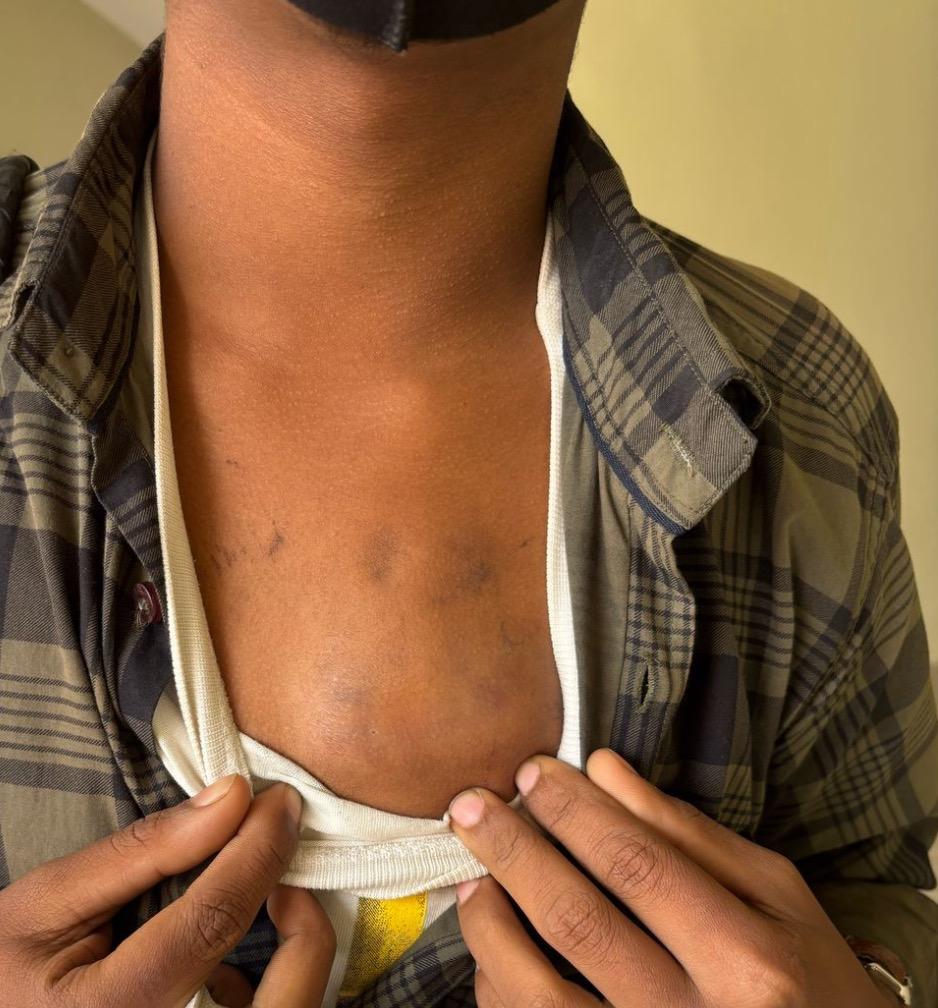
Case Presentation: A 16-year-old male presented with a gradually enlarging, dull-aching soft tissue swelling on his chest wall for the past four months along with low-grade fever. Ultrasonography of the swelling showed ill-defined, heterogenous hypoechoic collection in the subcutaneous plane of left paramedian anterior chest wall, superficial to pectoralis major muscle. This finding corroborated with the HRCT thorax report. FNAC of the swelling was done and ZN staining of the aspirate revealed acid-fast bacilli. Nucleic acid amplification test (NAAT) confirmed rifampicin sensitive Mycobacterium tuberculosis. The patient had complete resolution following a 6-month course of anti-tubercular chemotherapy in accordance with 2024 NTEP guideline (India) along with surgical drainage of the abscess.
Discussion: Clinical, microbiological, and radiological findings must be combined and corroborated to confirm a case of subcutaneous tuberculous abscess. Surgical drainage and debridement of the abscess along with administration of anti-tubercular drugs is required for a complete resolution of such cases.
Conclusion: In high prevalence areas, especially in the Indian subcontinent, tuberculosis should always be a differential diagnosis in any soft tissue swelling unless diagnosed otherwise.
Additional Files
Published
How to Cite
License
Copyright (c) 2025 Rohon Das Roy, Dipmala Das, Subhayan Das Gupta

This work is licensed under a Creative Commons Attribution-NonCommercial 4.0 International License.