Hepatitis B and hepatitis C viruses in the development of hepatocellular carcinoma and molecular mechanisms of carcinogenesis
Keywords:
Hepatocellular Carcinoma (HCC), Hepatitis B Virus (HBV), Hepatitis C Virus (HCV), Oncogenesis, HBx, Epigenetic Modifications, Targeted TherapyAbstract
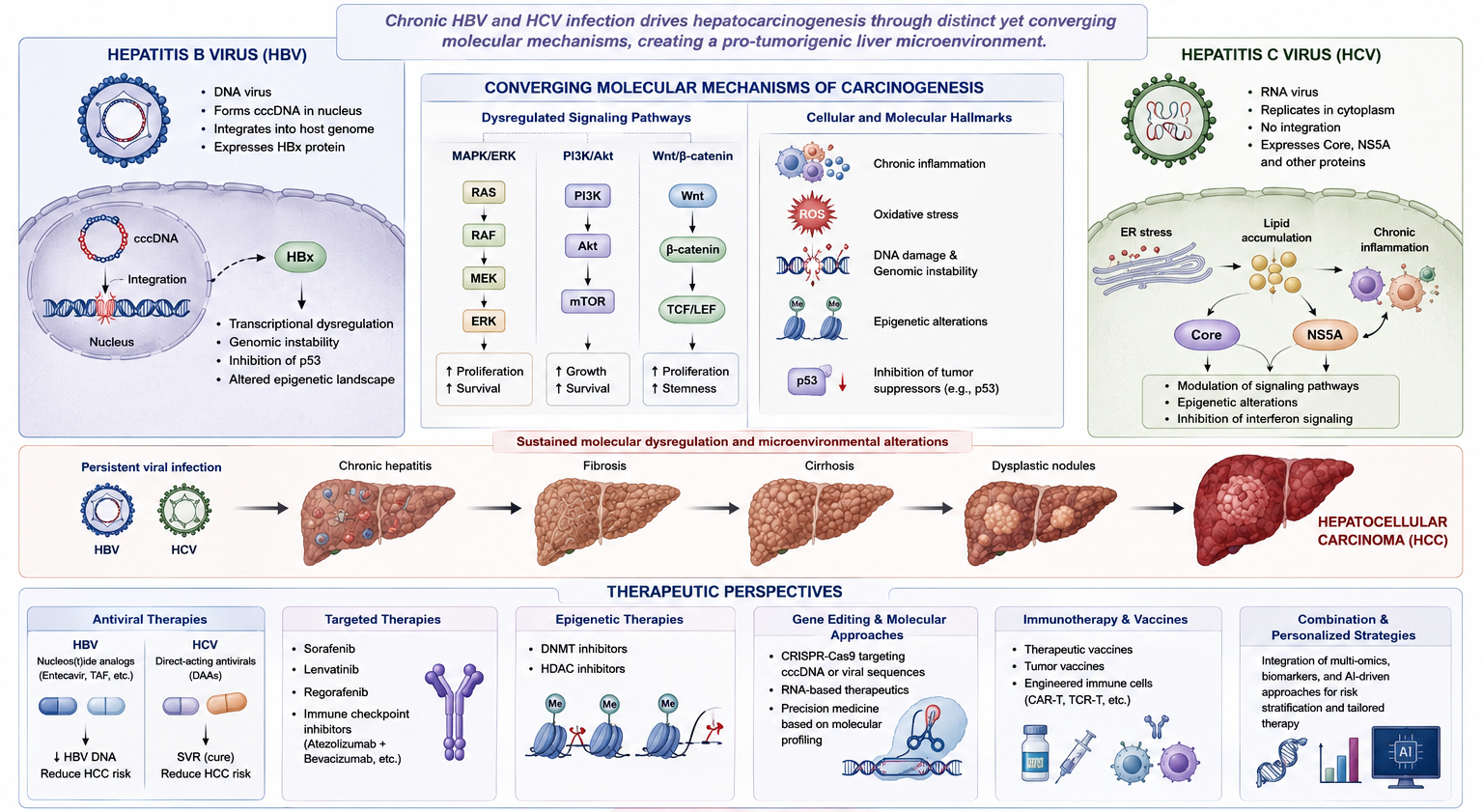
Death from liver cancer spreads wide, mainly fueled by persistent hepatitis B or C infections. Not alike in origin, yet both viruses twist liver cell routines - genetically, operationally - to spark malignancy. One truth stands: differences matter, even if outcomes feel similar. HBV stores data in DNA; worms its way into human genetic code; produces HBx, a disruptor nudging cells off balance. HCV operates through RNA instead; skips integration but stirs harm anyway - endless strain inside cellular zones, oil pooling in tissue, inflammation humming nonstop. Paths cross here: both mess with core signaling lines - MAPK/ERK, PI3k/Akt, Wnt/β-catenine - and mute built-in brakes such as p53 meant to stop runaway growth. Modern fixes exist: antivirals like DAAs and nucleos(t)ide copies cut risk for hepatocellular carcinoma. Still, shadows linger - the indestructible cccDNA form of HBV, plus lingering reprogramming of gene switches fixed wrong. Fresh tracks appear: molecular scissors including CRISPR-Cas9 adjust faulty blueprints right at source. Some trials probe custom therapies shaped molecule by molecule; others trial shields trained on cancer’s own markers. Understanding deepens - not fast, not clean - with every shift in approach.
Additional Files
Published
How to Cite
License
Copyright (c) 2026 Aida Abbasi, Arefeh Zabeti Touchaei

This work is licensed under a Creative Commons Attribution-NonCommercial 4.0 International License.