Molecular mechanisms of Epstein–Barr virus–driven oncogenesis and emerging therapeutic strategies
Keywords:
Epstein–Barr virus, Viral oncogenesis, Latency, LMP1, EBNA1, Immune avoidance, Tumor microenvironment, EBV-associated malignancies, Targeted therapyAbstract
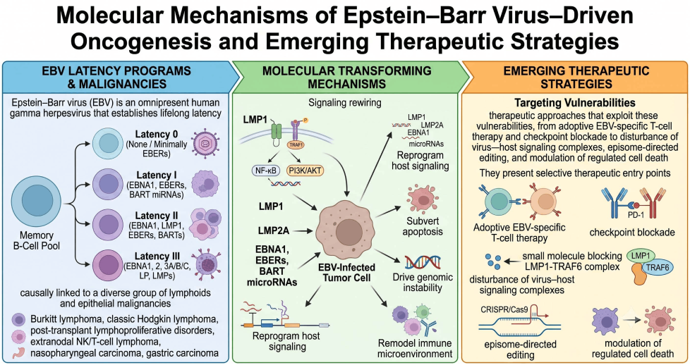
Epstein–Barr virus (EBV), a ubiquitous human gamma herpesvirus that establishes lifelong latency, was the first virus shown to cause human cancer. It is now causally linked to a diverse group of lymphoid and epithelial malignancies, including Burkitt lymphoma, classic Hodgkin lymphoma, post-transplant lymphoproliferative disorders, extranodal NK/T-cell lymphoma, nasopharyngeal carcinoma, and a distinct molecular subtype of gastric carcinoma. What unifies these otherwise dissimilar tumors is their dependence on the viral latency programs, in which a small set of latent proteins (notably LMP1, LMP2A, and EBNA1) and non-coding RNAs (the EBERs and BART microRNAs) reprogram host signaling, subvert apoptosis, drive genomic instability, and remodel the immune microenvironment. Because these viral products are essential for tumor maintenance yet absent from normal tissue, they present selective therapeutic entry points. This review examines how EBV latency is established and controlled, how latent gene products cooperate to transform the cell, and how the virus evades innate and adaptive immunity. It then surveys therapeutic approaches that exploit these vulnerabilities, from adoptive EBV-specific T-cell therapy and checkpoint blockade to disturbance of virus–host signaling complexes, episome-directed editing, and modulation of regulated cell death. Progress across these fronts is uneven, but together these approaches mark a shift from treating EBV as an incidental marker toward treating it as an actionable driver of disease.
Additional Files
Published
How to Cite
License
Copyright (c) 2026 Aida abbasi, David Drake, Arman Ahmadi

This work is licensed under a Creative Commons Attribution-NonCommercial 4.0 International License.