FDG-avid external iliac lymph node suspicious for metastatic involvement in progressive radioiodine-refractory papillary thyroid carcinoma: a case report and brief literature review
Keywords:
Papillary thyroid carcinoma, Radioiodine-refractory, [18F]FDG PET/CT, Suspicious external iliac lymph node metastasisAbstract
Introduction: Papillary thyroid carcinoma (PTC) generally has a favorable prognosis; however, a subset of patients develops progressive radioiodine-refractory disease. Pelvic lymph node involvement is uncommon. We report a case of progressive radioiodine-refractory PTC with an FDG-avid external iliac lymph node suspicious for metastatic involvement.
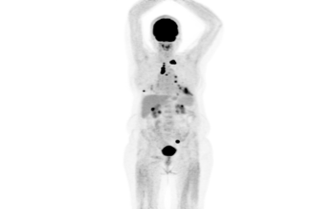
Case Presentation: A 72-year-old woman diagnosed with PTC in 2019 underwent total thyroidectomy followed by three courses of radioactive iodine therapy (cumulative activity, 450 mCi). Serum thyroglobulin remained persistently elevated (>300 ng/mL). Lenvatinib therapy was discontinued because of severe gastrointestinal adverse effects and reported cardiovascular complications. Following thoracic radiotherapy, [18F]FDG PET/CT in August 2025 demonstrated a partial metabolic response in the irradiated lesions. However, follow-up imaging in April 2026 revealed progressive FDG-avid disease, including a newly developed, intensely FDG-avid external iliac lymph node (SUVmax, 37) suspicious for metastatic involvement. Small bilateral FDG-avid renal lesions were also identified. Histopathological confirmation of these findings was unavailable.
Discussion: The external iliac lymph node represents an unusual site of suspected disease involvement in PTC. Although its intense FDG uptake and interval appearance in the setting of progressive systemic disease raise suspicion for metastatic involvement, the absence of pathological confirmation prevents a definitive diagnosis. The renal lesions also remain indeterminate without dedicated imaging or histopathological evaluation.
Conclusion: This case highlights the potential value of [18F]FDG PET/CT in identifying atypical sites of suspected disease involvement in progressive radioiodine-refractory PTC. Unusual FDG-avid findings should be interpreted cautiously when pathological confirmation is unavailable.
Additional Files
Published
How to Cite
License
Copyright (c) 2026 Fatemeh Saboktakin, Mohammad Reza Ghasri, Shaghayegh Nourbakhsh, Manouchehr Aghajanzadeh, Sam Moslemi, Masoud Kermansaravi, Sarvenaz Mirzakhani

This work is licensed under a Creative Commons Attribution-NonCommercial 4.0 International License.