The link between malignancy and arterial thrombotic events: a systematic review across cancer types
Keywords:
Arterial Thrombotic Events, Cancer, Myocardial Infarction, Ischemic Stroke, Thromboembolism, Cardio-Oncology, Systematic ReviewAbstract
Introduction: A diagnosis of cancer is associated with an elevated risk of arterial thrombotic events (ATEs), including myocardial infarction (MI) and ischemic stroke. This systematic review synthesizes the current evidence on the epidemiology, risk factors, time-dependent risks, and outcomes of ATEs across a spectrum of malignancies to guide clinical practice and future research.
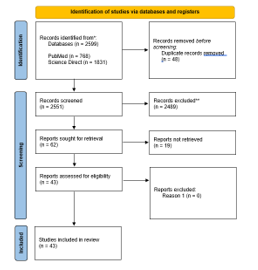
Materials and methods: We systematically searched PubMed and Science Direct from inception to January, 2026 for studies reporting on ATEs in cancer patients. Data on patient demographics, cancer types, treatment modalities, ATE outcomes, and risk estimates were extracted. The risk of bias was assessed using appropriate tools.
Results: Forty-three studies were included. The evidence demonstrates a clear association between cancer and an increased risk of ATEs (HR/OR range: 1.5-3.0). High-risk malignancies included lung, pancreatic, gastrointestinal, and brain cancers. The risk was most pronounced in the peri-diagnostic and first 6-12 months after diagnosis. Key contributing factors included advanced cancer stage, specific chemotherapies (e.g., platinum-based agents), radiotherapy, and the perioperative period. Traditional cardiovascular risk factors compounded this risk. Despite the established association, evidence for optimal prophylactic strategies is lacking.
Conclusions: Cancer confers a significant and time-dependent increased risk of ATEs, necessitating increased clinical vigilance. A proactive, multidisciplinary approach involving cardio-oncology is essential for risk stratification, aggressive management of traditional risk factors, and patient education. Future research must focus on mechanistic studies, predictive biomarker development, and randomized controlled trials to establish effective prevention and treatment strategies.
Additional Files
Published
How to Cite
License
Copyright (c) 2026 Moontasir Ahmed, Shadman Newaz , Jannatara Tina , Ananya Sen , Lamia Ashraf , Kumari Preity Rani Neogie , Hafsa Akter Ava , Snigdho Hritom Sil , Tahea Zaman Deena

This work is licensed under a Creative Commons Attribution-NonCommercial 4.0 International License.