Examining the frequency of brain tumors in Porsina Hospital in Rasht based on pathological and surgical characteristics
Keywords:
Brain tumors, Clinical and laboratory information, Frequency, HistopathologyAbstract
Introduction: Understanding the frequency of malignant and non-malignant brain tumors is crucial for understanding disease causes. Factors such as histological type, age of diagnosis, sex, and race are considered. Identifying risk factors such as allergy, ionizing radiation, and hereditary factors is important for prevention and early detection. Large epidemiological studies can provide a deeper understanding of this subject. Limited studies have been reported on the epidemiologic profile of brain tumors.
Materials and methods: This research was conducted on 580 patients, and all information on patients with malignant and benign brain tumors was extracted from their pathology reports, with emphasis on basic patient characteristics, such as age, gender, etc. All obtained data were statistically analyzed using software such as Excel and SPSS version 14, and the results were presented in the form of figures and tables.
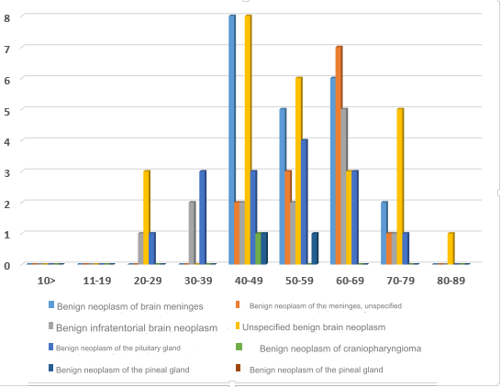
Results: Gender distribution varied among different brain tumor groups and was reported as statistically significant. The frequency of malignant, benign, and uncertain or unknown behavior neoplasms was also studied by age. A significant relationship was found between age and the type of brain tumor. The frequency of different types of neoplasms according to the status of the patients showed significant differences between different brain tumor groups.
Conclusions: The highest frequency was attributed to unspecified or unknown neoplasms of the brain, followed by malignant neoplasms and benign neoplasms of the brain. The study found a statistically significant difference in age and sex among different tumor groups. Tumors were more common in women than in men, contrary to previous studies. The prevalence of surgical tumors in Rasht shows an increase.
Additional Files
Published
How to Cite
License
Copyright (c) 2026 Seyed Amir Reza Shekarian , Ali Akbar Samadani, Kourosh Delpasand , Ali Ashraf , Zohreh Tymori , Paridokht Karimiyan

This work is licensed under a Creative Commons Attribution-NonCommercial 4.0 International License.